 Skip to main content

Like most construction stories, this one began with goals. Yet in this case, some of those goals were literal soccer nets. The Endeavor Health Chicago Fire Performance Center — a 51,600‑square‑foot training hub for the Chicago Fire Football Club — was envisioned as far more than another athletic building. It was designed to be a central home for every level of the club, including the First Team of professionals, the MLS NEXT Pros and the Academy for young up-and-coming players. The center would support training, recovery, collaboration, education and long-term player development, all within a single high-performance environment.
Achieving that ambition required a project team willing to do more than manage complexity. It required a team willing to embrace it. That’s where Pepper came in. From the earliest conversations through final completion, we worked with CFFC and our design partners to approach every challenge with collaboration, communication and a commitment to the club’s broader mission. The result is a facility that not only strengthens the club’s competitive trajectory but also reflects its identity and long‑term investment in Chicago.
Playing Through Pressure: Navigating Constraints Without Compromise
The Performance Center demanded adaptability from day one. Challenges weren’t hypothetical; they emerged as soon as work began. Staggered permits, unmarked utilities and limited permanent water and power required immediate rethinking of sequencing and site strategy.
Instead of pausing or waiting for downstream resolutions, our team kept the project moving through phased work and a suite of temporary solutions carefully designed to maintain the schedule.
Temporary utilities became mission-critical. Power was rerouted daily so our construction crews could work during daylight hours while allowing evening training sessions to occur without interruption. Water was transported from city hydrants to ensure that newly placed sod could root properly and that field work could progress without delay. We also had to remain responsive to environmental considerations. When workers discovered a protected shorebird nesting area on the site, we immediately cordoned off the zone and resequenced upcoming tasks. This protected wildlife habitats while maintaining progress on the larger site.
And throughout, the entire approach was rooted in real time collaboration. Sequencing was adjusted weekly — and sometimes daily — as permits became available, utilities came online and field conditions evolved. The project functioned more like a live, coordinated system than a traditional linear construction schedule.
This adaptability kept the schedule intact and preserved quality across all scopes. It also set the tone for a project defined not just by execution, but by a shared willingness to solve problems quickly and transparently.
Engineering Year Round Performance: Building Reliability Into the Surface
Chicago’s climate may build character, but it rarely builds ideal training conditions. Snow, ice and wildly shifting temperatures make reliable outdoor practice a challenge for any team. To meet the Fire’s development goals, the Performance Center needed pitches that played consistently from winter through summer. Delivering that reliability required innovation at the ground level.
Hybrid Pitches Designed for Precision
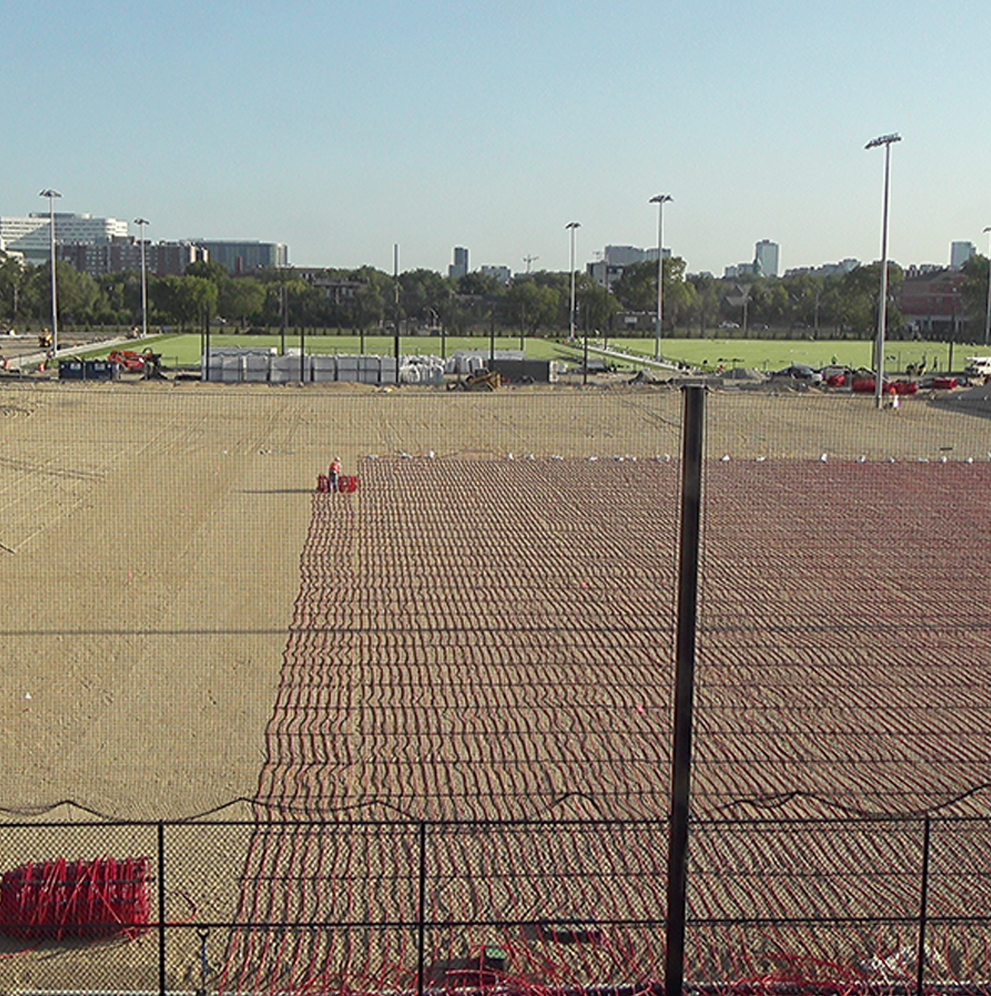
Among the center’s five full-size fields, known as pitches in soccer terms, two and a half feature hybrid turf systems supported by a hydronic undersole heating network. The hybrid design includes a 12 inch sand and peat root zone engineered to maintain structural consistency season after season. Beneath that sits a network of 50 miles of PEX tubing that delivers controlled heat, helping maintain field integrity even during freezing temperatures.
Hybrid fields of this scale are rare in the United States, and their installation demands meticulous logistics. Multiple crews worked simultaneously to lay irrigation lines, install heating systems, test pressure and ensure the subsurface layers performed exactly as intended.
Just In Time Sod Installation
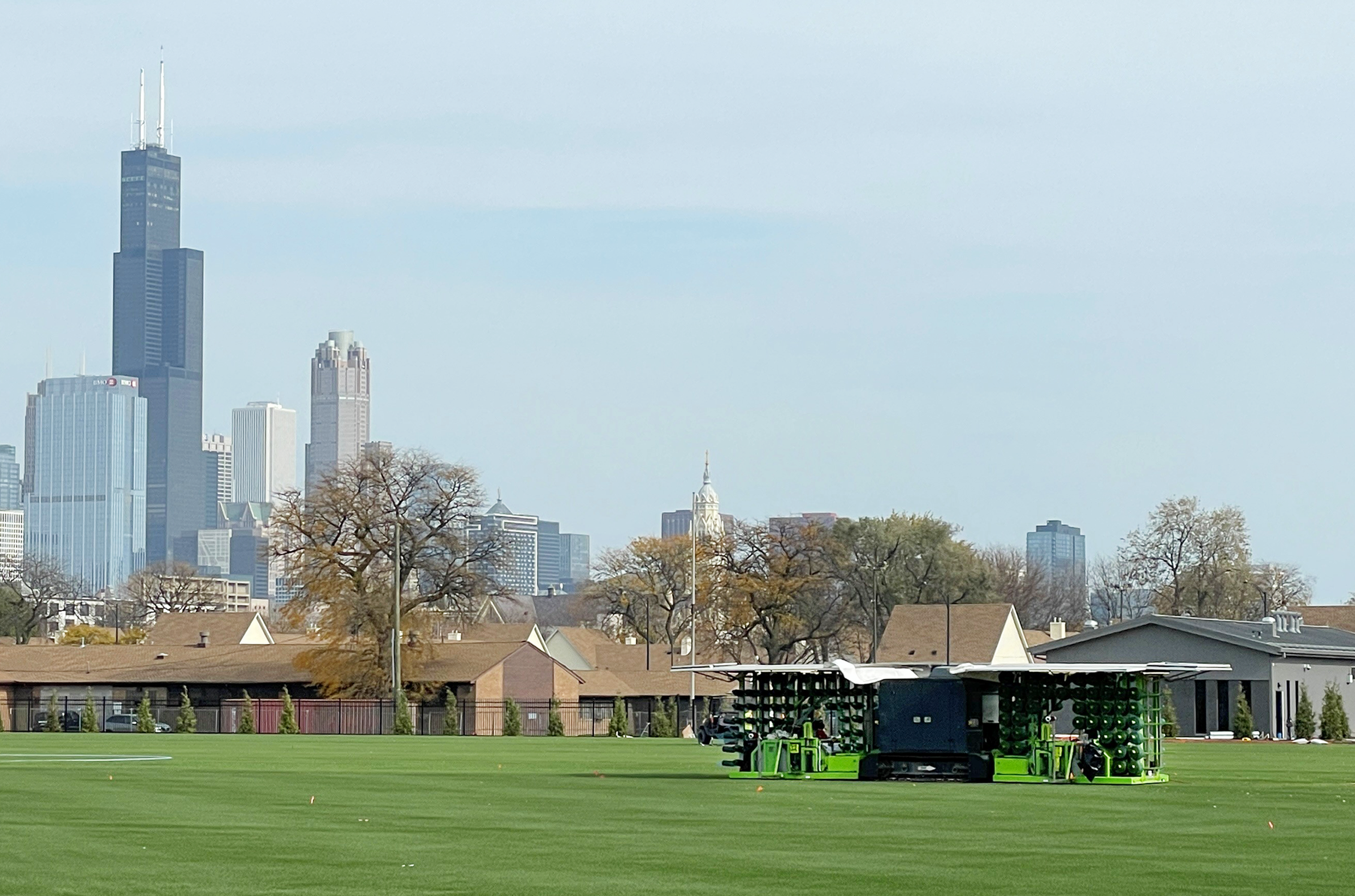
The team also executed a highly coordinated sod installation process. Timing was critical: turf harvested too early could dry out, and turf harvested too late could miss its optimal rooting window. To preserve integrity, 5.5 acres of sod were installed immediately upon delivery — a feat of scheduling, transportation and teamwork.
The process of turf stitching ran 24 hours a day for 22 days, and 5.5 acres of sod were laid in just six days—timed within 24 hours of harvest to preserve turf integrity. The pitches were irrigated through a 44-zone system with 144 sprinkler heads.
Weatherproofing Player Development
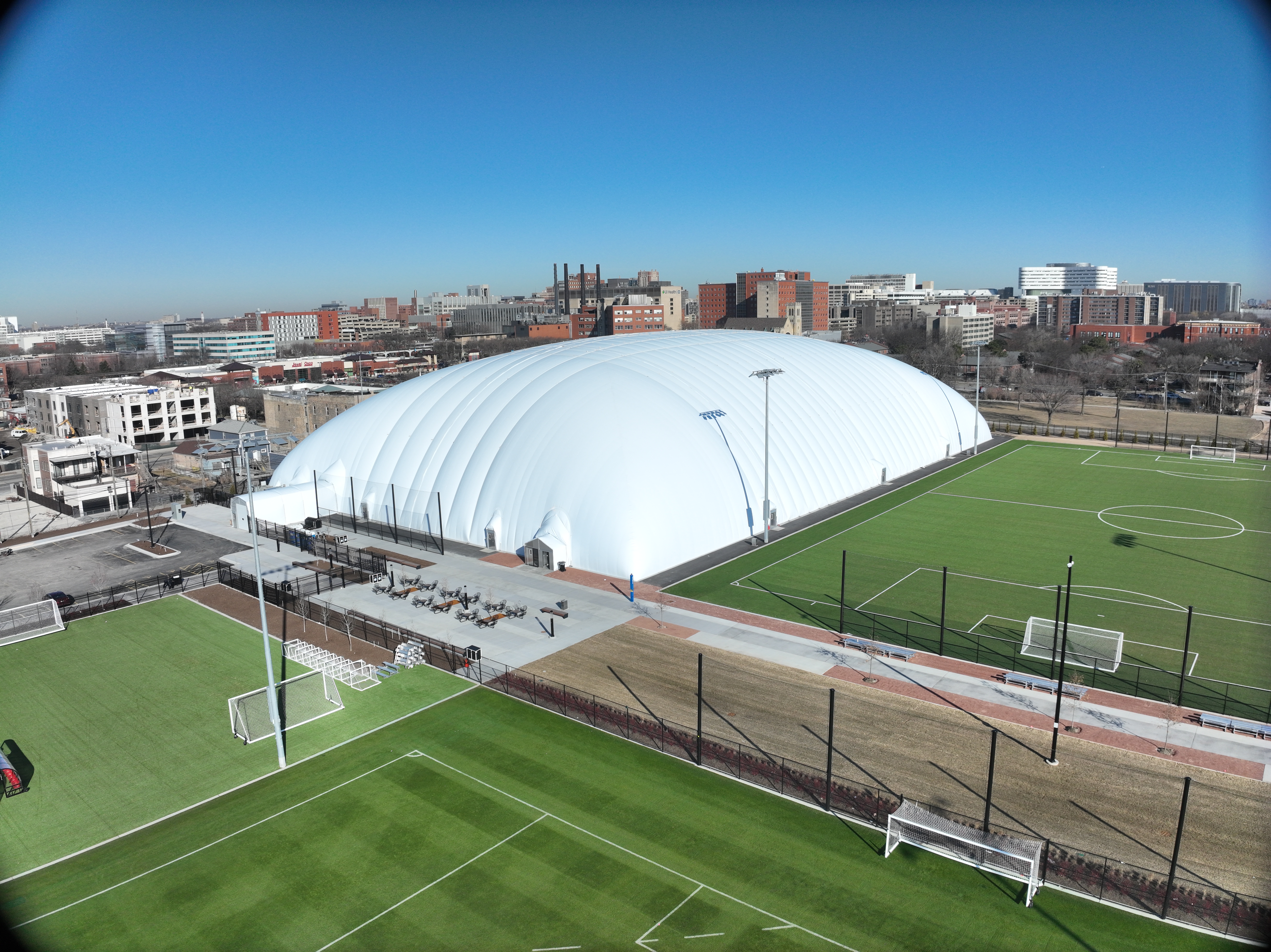
To further secure year round development, a seasonal air supported dome covers one Academy pitch during Chicago’s coldest months. This ensures that even if conditions outside are unplayable, young athletes have a consistent training environment that reinforces the club’s long term investment in its pipeline.
Together, these systems ensure the pitches perform consistently, reliably and safely — not just for today’s roster, but for future generations of Fire players.
Player Investment: Elevating Health, Recovery and Retention
Inside the building, the focus shifts from performance surfaces to human performance. The center was shaped around athlete wellness, recovery and connection, recognizing that competitive advantage is built as much off the field as on it.
Leading Edge Recovery Infrastructure
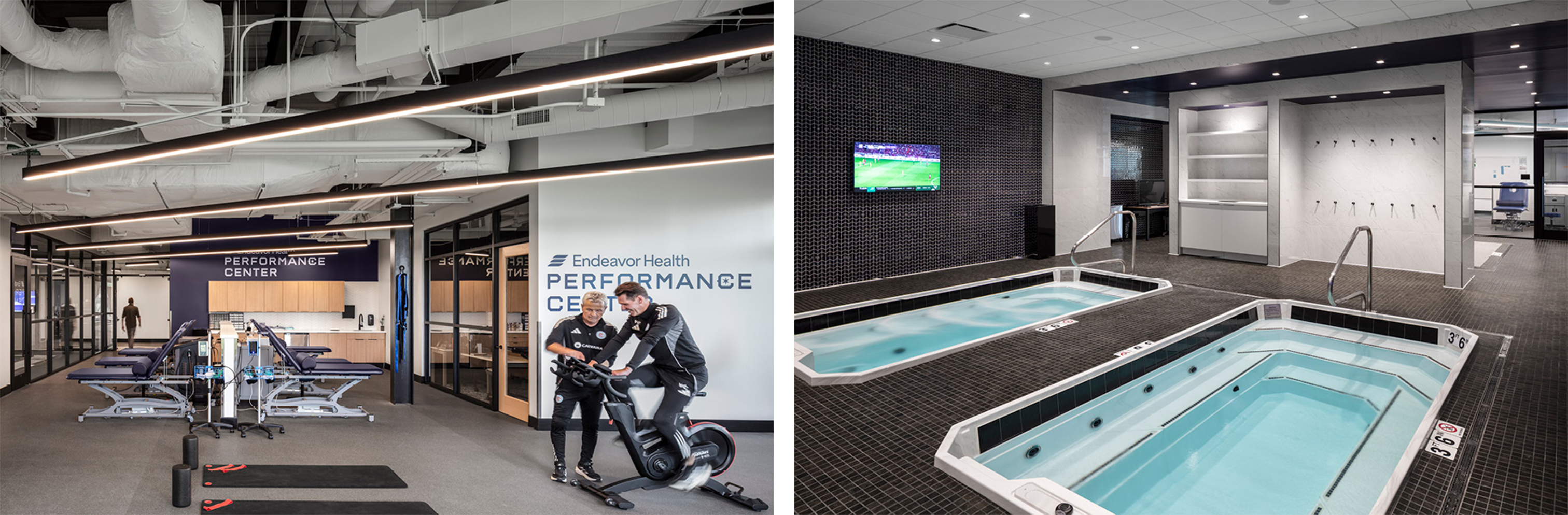
The Fire’s facility includes the nation’s largest cryotherapy chamber, a tool increasingly used in elite athletics to reduce inflammation and accelerate recovery. Hydrotherapy and treadmill pools add additional layers of support, allowing targeted conditioning and rehabilitation. These amenities are not luxuries – they are essential to shortening recovery windows, preventing injury and maximizing athlete availability.
Spaces That Support Connection
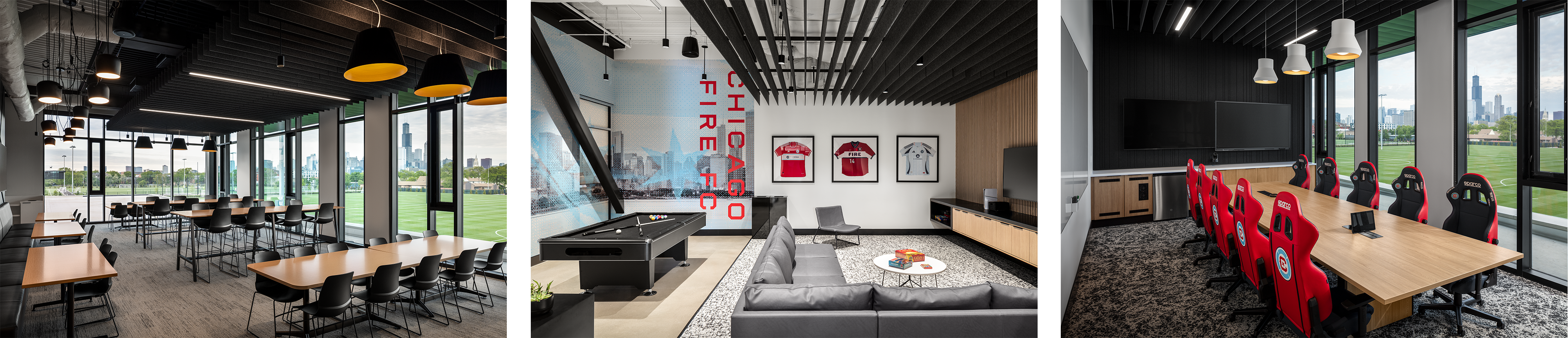
Just as important as the treatment rooms are the spaces that support interaction across the organization. Shared lounges, collaboration areas, open offices and a communal cafeteria encourage staff, coaches and players to engage organically throughout the day. These environments foster trust, communication and culture — all critical to team performance.
Designed for the Future
From a planning standpoint, the center supports the Major League Soccer (MLS) Homegrown Player framework and positions the club to attract and retain top talent. Flexible space planning allows for future growth, new technologies and evolving training methodologies.
The building’s interior doesn’t just support today’s needs, it anticipates tomorrow’s.
One Team, One Timeline: Collaboration as a Competitive Edge
Behind the scenes, the project succeeded because every contributor — from Pepper to designers to trade partners — worked as one.
Real Time Collaboration
The entire team operated from the same information at the same time. Regular joint drawing reviews and onsite coordination sessions ensured that decisions were shared, understood and executable across all disciplines. This approach prevented rework, reduced delays and strengthened accountability.
Cross Functional Coordination
Unmarked utilities, active infrastructure and staggered permits required scopes to be tightly synchronized. Field conditions, design intent and construction sequencing advanced together rather than independently, allowing the team to adjust instantly as new information emerged.
Adaptive Problem Solving
Every phase required creative solutions. When utilities lagged, teams balanced power loads between construction time and evening practices. When water access was limited, crews transported thousands of gallons from city hydrants. When wildlife required protection, teams adapted without pause.
Precision Execution
Installing five pitches — and the complex systems beneath them — required tightly choreographed sequencing. Crews worked simultaneously on heating, irrigation and drainage systems, while others prepared for just in time sod placement. Safety remained paramount throughout.
Shared Commitment and Communication
Transparency wasn’t an aspiration – it was the daily operating model. Frequent updates and unified decision making built trust across the project team and enabled a fast, coordinated delivery.
Built With Purpose: Sustainability, Inclusion and Community
The Performance Center reflects the Fire’s mission on and off the field. It is an investment in sustainability, community and equitable opportunity.
Sustainability
The project is pursuing LEED Silver certification, supported by an 8% modeled energy cost reduction and an estimated 33,930 ton annual emissions savings. The team diverted 82.76% of waste from landfills and recycled 581 tons of material, while relying on 33 EPD verified products to maintain responsible sourcing. Low emitting paints, coatings and adhesives protect indoor air quality throughout the building.
Community Landscape
The planting of 1,600 new trees strengthens neighborhood biodiversity, provides shade, enhances stormwater management and establishes long term ecological resilience.
Inclusive Workforce Participation
The project exceeded all diversity goals, partnering intentionally with underrepresented firms and strengthening local economic capacity. Minority owned businesses represented 26% of participation, women owned businesses 6% and disadvantaged business enterprises 3%. In addition, the workforce included 3% Section 3 workers, who are low-income, local residents.
Spaces That Promote Belonging
The building’s second floor houses coaching, technical and administrative functions within open, light filled spaces that promote transparency and equal access. Visual connections to the outdoors reinforce well being and create an environment grounded in community and collaboration.
These values shaped every decision, making the facility a reflection of Chicago’s diverse fabric and a model for inclusive development in professional sports.
A Flagship for the Club and the City
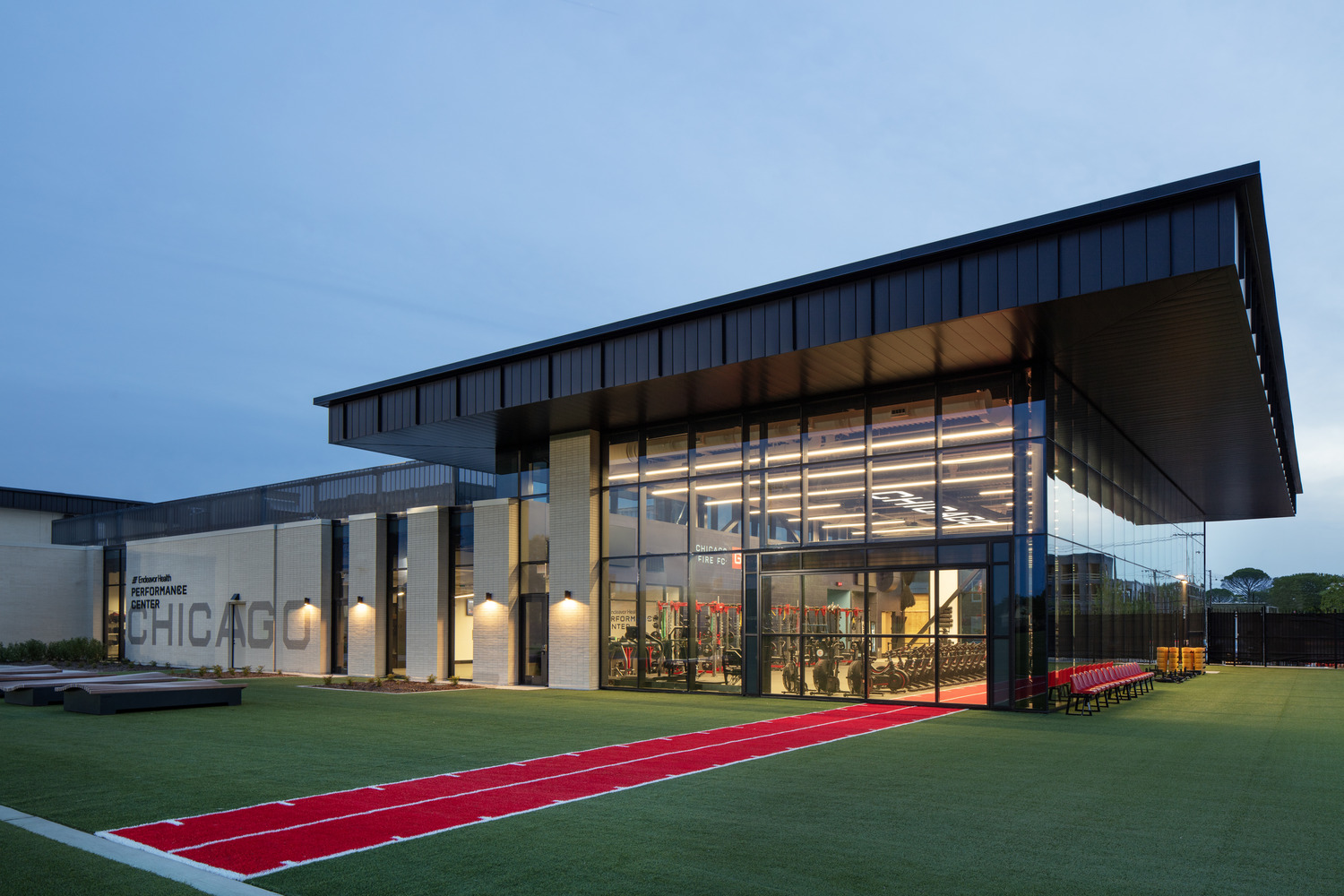
The Endeavor Health Chicago Fire Performance Center is more than a facility. It is a platform for how the club trains, recovers, collaborates and connects — a place built to shape identity as much as competition. It supports the MLS Homegrown Player framework, strengthens operations, reinforces community commitments and signals the club’s long term ambition.
The trust and teamwork built through this project have already carried forward. The tri-venture of Pepper | GMA | ALL Construction has been selected to deliver the club’s next major milestone: a new, ground up 22,000-seat stadium in The 78, Chicago’s newest neighborhood.
The Performance Center proves what collaboration can deliver — not just a building, but a foundation for future success.


