 Skip to main content

The circle, one of the simplest shapes in construction, has historically been valued for structural strength and efficiency. Leveraging this idea by putting circularity into practice, we’re building smarter and cleaner in a way that clients can sustain.
Shifting the Trajectory
As simple as the shape on which it’s based, the concept of circularity in construction emphasizes operating in a closed-loop system, where waste is minimized and materials are recycled.
A few guiding principles serve as a starting point:
- Building Design emphasizes deconstruction and repurposing rather than demolition, as well as durability to minimize frequent renovations.
- Waste Management focus on salvaging and reusing materials in new projects.
- Resource and material selection prioritizes bio-based, non-toxic, renewable and recycled content, low environmental impact, and local availability to improve outcomes and reduce the need for raw materials, energy consumption and negative transportation impact.
It’s not a new idea. The carpet recycling industry has diverted more than 5 billion pounds of carpet from landfills over the past 15 years.
Among the first in the industry, Pepper’s green building program has evolved to high performance and sustainability expertise that addresses the life of a building and the lives of those who occupy it. Our approach to creating resource-positive, environmentally conscious buildings – from life-cycle assessment and comprehensive recycling plans to sustainable materials and LEED certifications – has kept an average of 90% of construction waste on every project from landfills.
“The industry has been working with a ‘take-make-dispose’ mindset for decades,” says Juanita Garcia, Project Executive, High Performance and Sustainable Construction. “As the stresses of rising energy and raw materials costs, resource shortages and supply chain disruptions increasingly converge, we’re looking more intensely at what we can do to shift the trajectory to activities that contribute to a healthy future.”
The shift is emerging in new laws, as well, like those recently passed in Illinois that promote sustainable solutions for battery and paint recycling. Overall, programs such as the Illinois Extended Producer Responsibility policy drive companies to design and manufacture products that allow for end-of-life recycling. This is contributing to trends in total U.S. greenhouse gas emissions, which are showing a 5.2 percent decrease between 1990 and 2023, down 18 percent from the 2007 peak.
Reduced carbon emissions and waste, extended infrastructure lifespan, cost savings, adaptability and innovation – the benefits of employing circularity are considerable. Challenges, including technological barriers, scalability issues, upfront costs and knowledge gaps, must also be considered. Two recent Pepper projects highlight what successful integration can look like.
Towards a More Sustainable Future
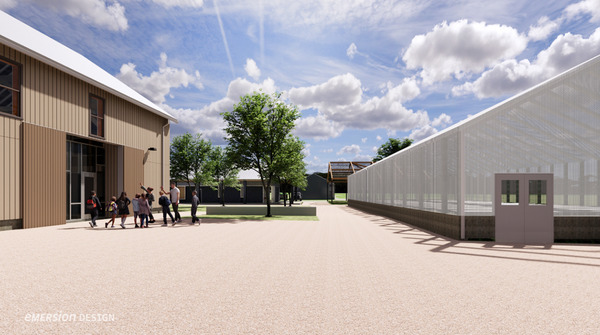
Owned by Great Parks of Hamilton County, Ohio, Shaker Trace Nursery is one of the largest native seed nurseries in the state. The team considered reusability from the start of a multi-building renovation on this 16-acre site. More than 260 plants representing approximately seven different species were harvested from the exterior landscaping prior to construction and successfully replanted throughout the grounds upon completion.
Approximately 20 cubic yards of concrete, collected from demolished concrete pads, was crushed and reused to create gabion benches that provide eco-friendly, low-maintenance outdoor seating options with a modern aesthetic that can endure for 50-plus years.
A 200-year-old barn was repurposed as event space, and approximately 90 cubic yards of wood salvaged from the interior was converted for use as shutters on the exterior of other buildings on site. Designed to perform at Net Zero energy, the new facilities include four enclosed and one shade structure, all powered by energy generated on-site through solar panels and geothermal heat. Earning LEED Platinum, LEED Zero Energy and SITES certifications, the project is a robust example of how mindful design and waste management can contribute to a more sustainable future.
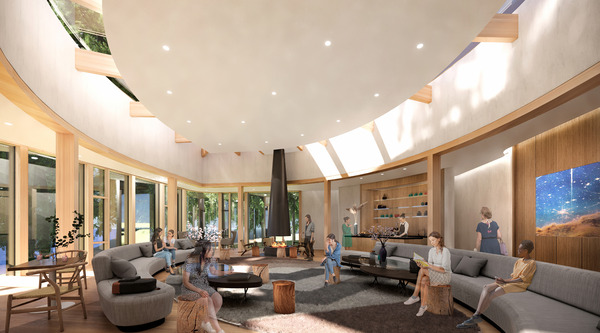
Pepper’s approach to constructing the Women’s Leadership Center, nestled on an 8-acre campus in Williams Bay, Wisconsin, exemplifies a primary strategy of circularity: source materials locally. Recognizing that transportation emissions can contribute significantly to the total upfront embodied carbon emissions on a project, the team zeroed in on improving supply chain sustainability. Local specialists were engaged to turn trees, felled during site preparation, into flooring, trim and architectural components and install the features in the Center’s three structures that overlook Lake Geneva. Remaining lumber in good condition was also salvaged to make wood planks.
When the Center opens in 2026, women at the forefront of public and private enterprise in many fields will have a distinct opportunity to collaborate and innovate in natural surroundings that inspire possibility and sustainability. Profound outcomes can sometimes arise from the simplest notions. Using the circle as our guide, we can improve people’s quality of life through the built world while also shaping a more sustainable future.


